![BEYOND PLATINUM INSURANCE BROKERS [FSP. 52312]](https://bpinsure.co.za/wp-content/uploads/2023/07/BP-B-2-ai.png)
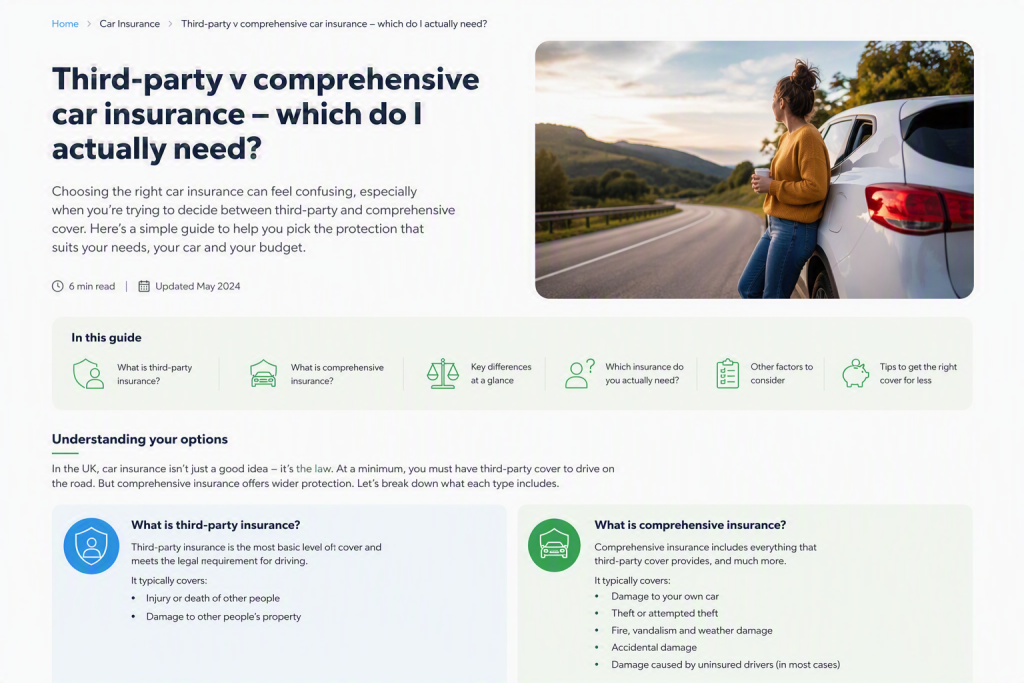
Third-Party vs Comprehensive Car Insurance: Understanding the Difference
Choosing car insurance can seem straightforward until you’re faced with the choice between third-party insurance and comprehensive insurance. While both provide financial protection, they cover very different risks.
The right option depends on factors such as your vehicle’s value, your budget, where you drive, and how much financial risk you’re willing to carry yourself.
This guide explains the differences and helps you determine which type of cover best suits your needs.
What Is Third-Party Car Insurance?
Third-party insurance is the most basic form of vehicle cover. It generally protects you against claims from other people if you are found legally responsible for an accident.
Typically Covered:
✅ Damage to another person’s vehicle
✅ Damage to another person’s property
✅ Injury claims from third parties
✅ Legal liability arising from an accident
Typically Not Covered:
❌ Damage to your own vehicle
❌ Theft of your vehicle
❌ Storm, hail or flood damage
❌ Fire damage
❌ Vandalism
Best Suited For:
- Older vehicles with a low market value
- Drivers looking for the most affordable cover
- Vehicle owners who could afford to replace or repair their own car if necessary
What Is Comprehensive Car Insurance?
Comprehensive insurance offers broader protection. In addition to covering third-party claims, it also protects your own vehicle against a range of unforeseen events.
Typically Covered:
✅ Damage to your own vehicle following an accident
✅ Third-party damages and liability
✅ Theft or attempted theft
✅ Fire damage
✅ Hail and storm damage
✅ Vandalism
✅ Accidental damage
Many insurers also offer optional extras such as roadside assistance, car hire, windshield cover and extended liability protection.
Best Suited For:
- New or financed vehicles
- Expensive vehicles
- Drivers who rely heavily on their vehicle
- Those wanting greater financial protection and peace of mind
Third-Party vs Comprehensive Insurance at a Glance
| Feature | Third-Party | Comprehensive |
|---|---|---|
| Covers damage to other vehicles | ✅ | ✅ |
| Covers third-party liability | ✅ | ✅ |
| Covers your own vehicle | ❌ | ✅ |
| Theft protection | ❌ | ✅ |
| Fire damage | ❌ | ✅ |
| Natural disaster damage | ❌ | ✅ |
| Vandalism | ❌ | ✅ |
| Premium cost | Lower | Higher |
| Financial protection | Basic | Extensive |
Which Insurance Do You Actually Need?
Choose Third-Party Insurance If:
You drive an older vehicle whose replacement value is relatively low.
For example, if your car is worth R30,000 and comprehensive premiums would cost several thousand rand per year, basic liability cover may provide better value.
Third-party insurance could also suit drivers who have enough savings to repair or replace their own vehicle if needed.
Choose Comprehensive Insurance If:
Your vehicle would be expensive to repair or replace.
Comprehensive cover is often a wise choice if:
- Your vehicle is financed
- You depend on your car for work
- You frequently drive long distances
- You park in public areas
- You want protection against theft, hail or accident damage
For many motorists, a single major accident could cost significantly more than several years’ worth of comprehensive premiums.
Factors to Consider Before Choosing
Vehicle Value
The newer and more valuable your vehicle is, the more sense comprehensive insurance generally makes.
Budget
While third-party cover costs less each month, it could lead to substantial out-of-pocket expenses following an accident involving your own vehicle.
Risk Exposure
Consider:
- Crime levels in your area
- Frequency of driving
- Weather risks
- Parking arrangements
The greater the exposure to risk, the more valuable comprehensive cover becomes.
Financial Resilience
Ask yourself:
“If my car were stolen tomorrow, could I comfortably replace it?”
If the answer is no, comprehensive insurance may be the better option.
Common Mistakes Drivers Make
Choosing Based Only on Price
The cheapest premium isn’t always the most cost-effective solution when a claim occurs.
Underestimating Repair Costs
Modern vehicles contain advanced electronics, sensors and safety systems that can be extremely expensive to repair.
Assuming Comprehensive Insurance Covers Everything
Even comprehensive policies have exclusions, excess payments and coverage limits. Always read your policy wording carefully.
Final Verdict
There is no universal answer to whether third-party or comprehensive insurance is better.
Third-party insurance is ideal when keeping costs low is the priority and the vehicle’s value is relatively modest.
Comprehensive insurance is often the smarter choice for newer, financed or higher-value vehicles because it provides far broader protection against accidents, theft, weather events and unexpected losses.
Ultimately, the best insurance policy is one that balances affordability with the level of protection you would need if the worst happened.
Frequently Asked Question
Is comprehensive insurance worth the extra cost?
For most newer or financed vehicles, yes. The cost of replacing or repairing a vehicle after a major accident or theft can far exceed the difference in premium between third-party and comprehensive cover.
Keywords: third-party insurance, comprehensive car insurance, vehicle insurance comparison, car insurance South Africa, insurance cover options, affordable car insurance, vehicle protection.
